
Prof. Alam Md. Mahbub Harbin Institute of Technology, China |

Biography: Alam Md. Mahbub is a professor at Harbin Institute of Technology (China) since 2012. He worked as a senior lecturer at the University of Pretoria (South Africa), research and postdoctoral fellows at the Hong Kong Polytechnic University, and lecturer at the Rajshahi University of Engineering and Technology (Bangladesh). More than 450 technical articles are authored and co-authored, including 280 SCI journal papers. Most of the papers have been published in top-notched journals, including Journal of Fluid Mechanics, Journal of Fluids & Structures, Ocean Engineering, Physics of Fluids, and Journal of Sustainable and Energy Reviews. His papers are well-cited, 14,500+ (h-index 61) in the Google database. He has been listed as a highly cited researcher for 2018 - 2025 (single year) by Web of Science, ranked top 2% (rank: 8071). His research has mostly involved flow-induced vibrations, bluff-body wake, fluid-structure interactions, hydrodynamics of swimming animals, and energy harvesting from wind and ocean current. Prof Alam has received a number of awards: Japan Government Scholarship (monbusho) for Masters and PhD studies; JSPS (Japan Society for Promotion of Science) Postdoctoral fellowship; South Africa National Research Foundation (NRF) rating ‘Promising Young Researcher, Y1’; China 1000-young-talent scholar; Shenzhen High-Level Overseas Talent; and 2015 Shenzhen Outstanding Teacher. He is an editorial board member of ‘Wind and Structures’ (SCI), Sound and Vibrations (SCI), and Fluid Dynamics and Material Processing (SCI).
Speech Title: Kinematics and Hydrodynamics of Asymmetric Fish Caudal-Fin Motion for Efficient Swimming
Abstract: For hundreds of millions of years, adaptation and evolution have enabled fish to achieve excellent propulsion performance with their fast speed and high efficiency. During this long history of evolution, swimming animals have mastered an exquisite capacity to control their bodies and the flow around themselves to efficiently cruise in water. Researchers admire the swimming skills of aquatic animals and hope to have a similar capacity, conscientiously considering swimming performance to be scientific and explained in light of fluid dynamics. Generally, natural swimmers share two major propulsive strategies, including caudal-fin pitching propulsion (e.g. salmon, tuna, dolphins, and sharks) and travelling wave propulsion (e.g. eels and lampreys). A question arises, is the motion of the caudal fin symmetric about the propulsion axis when a fish swims? We therefore first conducted experiments on fish to understand the motion of the caudal fin. The motion is then numerically examined for a hydrofoil. We home in on the insight into the fluid-structure interaction involved and the relationship between the kinematics and thrust or efficiency. This lecture encompasses (i) experiments on fish, (ii) enhancement of both thrust and efficiency using the experimentally obtained motion, (iii) understanding of fluid-structure interaction, and (iv) the hydrodynamic performance of a traveling wavy foil with varying foil kinematics (Strouhal number), fluid properties (Reynolds number), and foil deforming characteristics (wavelength). The results show that the caudal fin motion is asymmetric with the retract stroke being faster than the forward stroke. The pitching motion with the faster retract strokes enhances both thrust and efficiency, and the propulsive force increases with increasing Strouhal number, Reynolds number, and wavelength. A decreasing wavelength leads to a smaller thrust. A slender tail or a slender swimming body cannot have a large traveling wavelength as a large added mass makes the tail or body heavier. A shorter wavelength makes thrust steadier while a longer wavelength enhances maximum instantaneous thrust. The latter is beneficial for prey to escape from a predator.

Prof. Shuyun Jiang
Southeast University, China
Biography: Shuyun Jiang is a second-level professor and doctoral supervisor at the School of Mechanical Engineering, Southeast University. He currently serves as Vice Chairman of the Mechanical Dynamics Branch of the Chinese Society for Vibration Engineering, director of the National University Manufacturing Technology and Machine Tool Research Association, and director of the Tribology Branch of the Chinese Mechanical Engineering Society. His research areas include mechanical dynamics, rotor dynamics, mechanical tribology, high-speed machining machine tools, flywheel energy storage technology, mechanical dynamic analysis and control, mechanical CAD/CAE/CAM, and electromagnetic suspension technology. Professor Jiang has led over 30 major research projects, including key projects funded by the National Natural Science Foundation of China (NSFC), the National 863 Program, and major national science and technology projects. He has published more than 100 SCI-indexed papers and has been consecutively recognized as a highly cited scholar by Elsevier China and listed among the top 2% global scientists by Stanford University. In 2017, as the primary contributor and project leader, he completed the project titled “Design Theory and Engineering Application of High-speed Precision Cutting Machine Tools,” which was awarded the First Prize of the Jiangsu Provincial Science and Technology Award in 2016. He has also received the Second Prize of the Ministry of Education Science and Technology Progress Award and the Second Prize for Technological Invention. Professor Jiang holds authorized national invention patents, with his key research focusing on the dynamic design of high-speed electric spindles and the thermal design of complete machine tools.
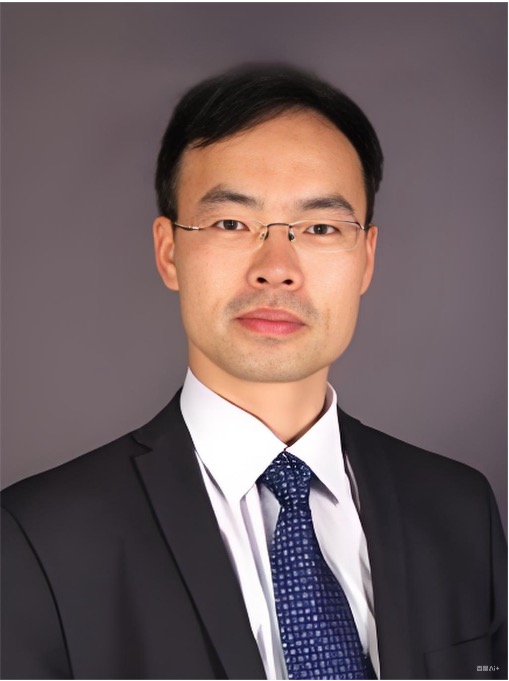
Prof. Jin Zhou
Xi'an Jiaotong University, China
Biography: Jin Zhou is a professor and doctoral supervisor at the School of Mechanical Engineering, Xi’an Jiaotong University, recognized as a National Youth Talent. He earned his Ph.D. from the University of Liverpool, UK. He has conducted aerospace composite materials research at the University of Cambridge and Imperial College London. His main research interests include impact dynamics of aerospace composites, lightweight structural design optimization, failure mechanisms and defect control theory, additive manufacturing, and forming processes. His research outcomes have been applied to impact-resistant lightweight structures of commercial aircraft and rapid prototyping manufacturing. Professor Zhou has led projects funded by the NSFC, National Key R&D Program, and China Aerospace Science and Technology Corporation’s Sixth Academy. He has published over 100 academic papers in journals such as Composites Science and Technology and Composite Structures. He has received the First Prize of the Invention and Innovation Award by the China Invention Association, the Gold Award at the International Invention Exhibition, and the Grand Prize of the Shaanxi Graduate Education Achievement Award. Before returning to academia, he worked as a Senior Structural Engineer in the UK industry, leading structural mechanics optimization and friction welding technology development projects, with technologies licensed in the UK, Germany, and the USA. He has established research collaborations with Imperial College London and Khalifa University. Currently, he serves as an editorial board member for Rocket Propulsion and the International Journal of Lightweight Materials and Manufacture.

Prof. Jianwei Lu
Hefei University of Technology, China
Biography: Automotive and Transportation Engineering, Hefei University of Technology. He has been selected as a New Century Excellent Talent of the Ministry of Education, one of the first batch of Class B High-Level Talents in Anhui Province, and a leader in academic and technological research in Anhui Province (the sixth batch). He is also a recipient of the 12th Anhui Youth Science and Technology Award.
He concurrently serves as executive director of the Society of Automotive Engineers of China (SAE-China), Vice Chairman of the Vehicle Dynamics Branch of SAE-China, Vice Chairman of the Vehicle Engineering Specialty Committee of the China Machinery Industry Education Association, Vice Chairman of the Education Branch of SAE-China, and Vice Chairman of the Expert Steering Committee for Talent Cultivation in the Automotive Electronics Industry of the China Computer Industry Association, among other academic posts.
His research mainly focuses on dynamics and control, vibration and noise, as well as reliability engineering.
He has successively presided over more than 70 scientific research projects, including programs under the National 863 Plan, the National Key R&D Program of China, the National Natural Science Foundation of China, the Aeronautical Science Foundation of China, major science and technology projects of Anhui Province, and various enterprise-commissioned projects.He has received the Top Ten Excellent Completed Projects Award in Mechanical Engineering from the National Natural Science Foundation of China, 7 provincial and ministerial-level science and technology awards including the Anhui Science and Technology Award and the Guangdong Science and Technology Award, as well as 2 other scientific research awards. His industry-university-research cooperation achievements were selected into the Excellent Industry-University-Research Cooperation Cases of Chinese Universities.He holds more than 60 authorized invention patents and software copyrights, and has published over 120 academic papers as the first author or corresponding author.
Speech Title: Research on time-delay dynamic behavior and control strategy of intelligent vehicle
Abstract: Time-delays widely exist in all links of perception, decision-making and actuation in vehicle dynamics control systems, which can degrade vehicle dynamic characteristics and even lead to potential driving safety hazards. As the software and hardware of intelligent vehicle control systems become increasingly complex, such systems require more comprehensive state observation parameters and introduce sophisticated models and algorithms such as nonlinear Kalman filters and nonlinear system observers. Accordingly, the time costs of state acquisition and computation in control systems increase significantly, making the influence of system time delays more prominent and greatly raising the risk that vehicle dynamic responses deviate from expectations. Therefore, understanding the time-delay dynamic behavior of vehicles and their corresponding control strategies serves as an important foundation and prerequisite for the research and development of high-performance vehicles.

Prof. Jinlu Yu
Air Force Engineering University, China
Biography: Jinlu Yu, Professor and Doctoral Supervisor of Air Force Engineering University(AFEU), Deputy Chief Engineer for Engine Specialty of an affiliated institution of Aero Engine Corporation of China (AECC). Engaged in research on aero-engine performance evaluation and advanced combustion. Presided over 15 projects including the National Major Science and Technology Special Program, Major Research Plan of the National Natural Science Foundation of China, Frontier Innovation Program of the Science and Technology Commission of the Central Military Commission, and Basic Enhancement Program. Awarded the Provincial and Ministerial Second-Class Prize (2025-1), authorized with 15 invention patents and published more than 60 academic papers. Shaanxi Province Special Support Program Leading Talents in Technological Innovation, Team Leader of Shaanxi Provincial University Youth Innovation Team. Head of a National Virtual Teaching and Research Room, Principal of a National First-Class Undergraduate Course, winner of Second Prize of National Teaching Achievement Award (2022-5), Outstanding Contribution Award (First Class) of the "China Heart for Aviation Power" Education Fund, and National Distinguished Young Teacher in Aviation Power.
Speech Title: Progress in Plasma Enhanced Combustion of Aircraft Engines
Abstract: At present,aeroengines suffer from insufficient ignition and stable combustion boundaries at low indicated airspeed on plateaus and high altitudes,and ignition as well as stable combustion in the high-speed airflow of scramjet engines under the condition of rarefied air in near space prove to be rather challenging.Under such complex operating conditions,conventional ignition methods are unable to meet the ignition requirements of aeroengine combustion chambers.Plasma,by virtue of its temperature rise/high-temperature effect,chemical effect and aerodynamic effect,has rendered plasma-enhanced combustion technology an effective technical approach for expanding ignition boundaries and extending the range of stable combustion,and it exhibits enormous application potential in the field of aeroengine ignition and combustion support.The combustion dome based on 3D rotating gliding arc plasma is a novel and original solution in the field of plasma ignition and combustion support.This combustion dome generates 3D rotating gliding arc plasma between the fuel nozzle and the Venturi tube,which enables the atomized fuel to undergo cracking upon passing through the plasma region so as to achieve ignition and combustion support.It features the advantages of lean fuel/low-temperature ignition,an expanded combustion range,improved combustion efficiency and low energy consumption.Air plasma jet igniters and pre-combustion plasma jet igniters also serve as novel technical schemes in the field of plasma ignition.In comparison with electric spark igniters,pre-combustion plasma jet igniters can effectively shorten the ignition delay time,greatly expand the ignition boundaries and enhance the ignition reliability.

Prof. Zhixin Wang
Shanghai Jiao Tong University, China
Biography: Zhixin Wang is a professor at Shanghai Jiao Tong University. He holds bachelor’s, master’s, and doctoral degrees from Zhejiang University. He has previously served as Deputy Director of the Department of Electrical Engineering, Director of the Hydraulics Laboratory, Deputy Director of the Mechatronics Control Research Institute, Assistant Dean of the School of Mechanical Engineering, and Deputy Director of the Science and Technology Department at Shanghai Jiao Tong University. He is Vice Chairman of the Shanghai Hydropower Engineering Society, committee member of the Renewable Energy Specialized Committee of the Chinese Society for Electrical Engineering, member of the Shanghai New Energy Association Expert Committee, executive director of the Shanghai Mechanical Engineering Society, member of the Fluid Control Engineering Specialized Committee of the Chinese Society of Mechanics, member of the Manufacturing Technology Specialized Committee of the Chinese Association of Automation, member of the Hydraulics Technology Specialized Committee of the Chinese Mechanical Engineering Society, and reviewer/editor for multiple journals including Control Engineering, Mechatronics, Automation Instruments, Proceedings of the Chinese Society of Electrical Engineering, Electric Power Technology, Electric Power Systems and Automation, Electric Power and Clean Energy, Shanghai Water Conservancy and Hydropower Technology, and Shanghai New Energy. He has been recognized with awards including the Young Science and Technology Expert Certificate of China Machinery Industry, Cross-Century Talent Certificate from the former Ministry of Machinery Industry, Shanghai New Long March Commando Certificate, Premier Youth Teacher Special Prize from the former Ministry of Machinery Industry, Second Prize of the Military Science and Technology Progress Award, and Silver Award at the China International Industry Fair.
Speech Title:Key Technologies and Recent Advances in District-Level Integrated Energy Systems
Abstract: Against the backdrop of high-proportion renewable energy integration, the growth of electrified loads, and the constraints of the "dual carbon" goals, power systems are confronted with intensified uncertainties and insufficient flexibility supply. Demand Flexibility Management (DFM) has emerged as a crucial approach to enhance the security, economic efficiency, and low-carbon operation of power systems. Integrated Demand Response (IDR) expands the demand-side regulation capacity through multi-energy complementarity and cross-system coordination, leveraging measures such as energy carrier substitution, energy conversion, and energy storage time-shifting. District-Level Integrated Energy Systems (DIES) integrate the "source-grid-load-storage" resources, thereby providing high-quality demand-side flexibility support for grids. However, DFM oriented towards DIES/IDR still faces several critical challenges that restrict its large-scale application. These challenges include difficulties in high-dimensional nonlinear modeling due to the coupling of multi-energy networks and multi-time scales, obstacles in robust assessment and scheduling under the superposition of renewable energy and load uncertainties, as well as issues regarding incentive compatibility, benefit allocation, privacy protection, and the coupling of "electricity-carbon-certificate-energy" mechanisms amid multi-agent participation.
Based on DFM, the paper analyzes the basic composition and functional characteristics of DIES, encompassing multiple interconnection forms such as multi-energy flow coupling, multi-system integration, and multi-region interconnection, various interaction modes including multi-link interaction, multi-agent interaction, and large-time scale interaction, as well as modeling methods for energy stations and energy networks. The paper innovatively proposes a DIES benefit evaluation method that accounts for carbon emission measurement and trading, along with operational mechanisms such as peer-to-peer power trading and carbon-energy coordinated operation. The optimal operation of DIES is realized through the implementation of demand-side response, carbon trading, green certificate trading, and integrated energy market trading. Combined with the application of peer-to-peer power trading, a hybrid game-based bi-level optimization framework is proposed for microgrid users, shared energy storage operators, and microgrid operators, which achieves the optimal scheduling of shared energy storage and integrated energy microgrid clusters. Meanwhile, the paper reviews the key technologies such as load-equipment-system coupling, multi-energy network and IDR system modeling, DFM framework, optimal scheduling, and market mechanisms. Finally, the paper analyzes the current technical and application status of DIES and prospects its development trend. It is concluded that DIES is evolving from "energy interconnection" to an "ecosystem characterized by high energy efficiency, economic viability, and full-factor carbon neutrality", and presents the feature of "digital-energy-carbon" ternary integration. Combined with typical application cases including virtual power plants, hospital trigeneration systems, commercial and industrial building trigeneration systems, and data centers, the paper argues that by optimizing the energy structure and adhering to the concept of "source-grid-load-storage" integration, the transition from "dual control of energy consumption" to "dual control of carbon emissions" can be achieved, and a dual control system of total carbon emissions and carbon intensity can be established. The research lays a theoretical foundation and provides a guarantee for the goal that the vast majority of newly-added electricity demand will be met by newly-added clean energy by the end of the "15th Five-Year Plan" period.

Prof. Feng Wu
Dalian University of Technology, China
Biography: Wu Feng, Professor at Dalian University of Technology, is a permanent member of the State Key Laboratory of Structural Analysis, Optimization and CAE Software for Industrial Equipment. He has been selected as a member of the 9th Physical Mechanics Professional Committee of CSTAM, and has served as an editorial board member or young editorial board member for journals such as Theoretical and Applied Mechanics Letters, China Offshore Platform, Chinese Journal of Applied Mechanics, and Chinese Journal of Computational Mechanics. In 2015, he earned a Ph.D. from Dalian University of Technology under the supervision of Academician Zhong Wanxie, and subsequently conducted postdoctoral research at the same institution. He has long been engaged in research in computational mechanics, uncertainty analysis, and reliability analysis, making a series of original contributions in these fields. He has published over 100 papers, including 47 SCI-indexed articles in prestigious international journals such as SEC(IF: 10.3), IJMS(IF: 9.4), CMAME(IF: 7.3), and MSSP(IF: 8.4), and has authored three academic monographs. His awards include the Military Science and Technology Progress Award, the Science and Technology Progress Award from the China Occupational Safety and Health Association, the National Teaching Achievement Award, and the Qian Weichang Outstanding Paper Award in Applied Mathematics and Mechanics. He has completed three scientific and technological achievements appraisals (two internationally advanced, one domestically leading), with a single achievement transformation valued at RMB 2.02 million.
Speech Title: Safety and Reliability Analysis of Complex Equipment Design, Operation and Maintenance
Abstract: Complex equipment is widely used in critical fields such as aerospace and manufacturing, where structural safety is important. Computational mechanics serves as a crucial method for analyzing the safety of complex equipment. However, complex equipment is characterized by coupled features of non-smoothness, multi-time scales, and multi-source uncertainties, leading to bottlenecks in traditional methods, including difficulties in balancing computational efficiency and stability, excessively high computational complexity in uncertainty quantification and reliability analysis, and the inability of real-time simulation to meet the requirements of structural dynamic monitoring. To address the challenges, this study has conducted a series of research based on symplectic algorithms. (1) A generalized symplectic algorithm encompassing rigid-elastic-fluid-thermal multi-physics fields was proposed. By introducing multi-time-step adaptive technology, it achieved accurate identification of non-smooth events and adaptively adjusted the time step in smooth and non-smooth response regions, effectively balancing computational efficiency and accuracy. Furthermore, six theorems regarding error propagation in symplectic matrices were revealed, leading to the development of an adaptive filtering-based fast symplectic precise integration method, enabling rapid computation of symplectic matrix exponentials. When applied to the analysis of nuclear reactor control rod assemblies, the proposed algorithm allowed a time step 20 times larger than that of commercial software while maintaining stable convergence. (2) This study developed a symplectic dynamic evolution integrated sampling technique capable of high-quality unified generation of samples for various types of random variables, including continuous, discrete, non-equally weighted, and so on, outperforming traditional sampling methods. Additionally, generalized quasi-Monte Carlo methods and improved perturbation methods were developed for complex scenarios such as high variability, low variability, and multimodal distributions, achieving high-efficiency and high-precision uncertainty quantification and reliability analysis for complex equipment structures. (3) A real-time simulation algorithm integrating measurement data with symplectic algorithms was proposed. Based on the principle of probability conservation, analytical expressions for conditional mean, variance, reliability, and such information of complex equipment under known measurement conditions were derived. By leveraging an attraction mechanism to identify key measurement conditions with high reference value for response estimation, the algorithm achieved second-level synchronization between the simulated response and the real response for complex equipment structures with millions of degrees of freedom.